Three ways to save the rainforest using Palm Oil

I am often asked by colleagues, friends and students whether buying palm oil free products will help save the rainforest. Honestly, the question makes me sad. Not just because I have to tell them ‘no,’ but also because the question is based on a simplified perspective on palm oil production. The caricature they are left with is based on public campaigning that paints palm oil as something fundamentally bad for the rainforest and it does not help them to make properly informed decisions. The truth is that even though a lot of bad practices can be associated with palm oil production, at present much of the world’s palm oil is produced by operators who are leading the way on social and environmental practices, and producing palm oil without deforestation. 

So then, what should I tell the people who ask me for a way to save the rainforests from the effects of badly produced palm oil? Well, there are three things they can do right away:

1. Buy products that contain Sustainable Palm Oil!

First and foremost, if you want a sustainable alternative to palm oil, there is already one available: sustainably-produced palm oil. 

Although there are a lot of people who don’t know this, palm oil can be and is often produced sustainably. In fact, sustainably produced palm oil is not only ‘not bad for the environment,’ it can actually contribute to a healthy ecosystem and even help save the rainforests. Let me explain.

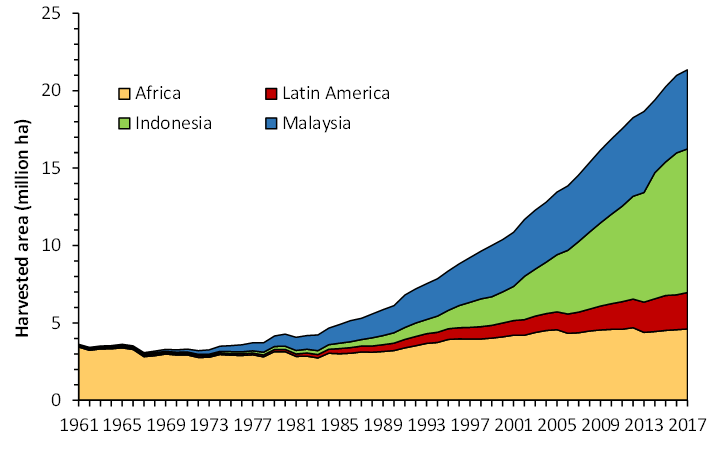
Palm oil, out of all edible oilseed crops, is by far the highest yielding. It yields 6 to 10 times higher than other vegetable oil crops.  It provides 35% of the world’s vegetable oil using only 10% of vegetable oil crop land globally. 

When sustainably produced, palm oil can actively be good for the environment, and the life that inhabits it. For example a team from the HUTAN Orang-utan Research Unit has discovered that orangutans in many areas of the Kinabatangan floodplain in Malaysian Borneo use oil palm plantations to move between forest fragments. They also use these plantations to nest, and even as a source of food. Progressive growers and conservation experts work together to ensure connectivity between fragments and that the animals are not disturbed. See this article to learn more.

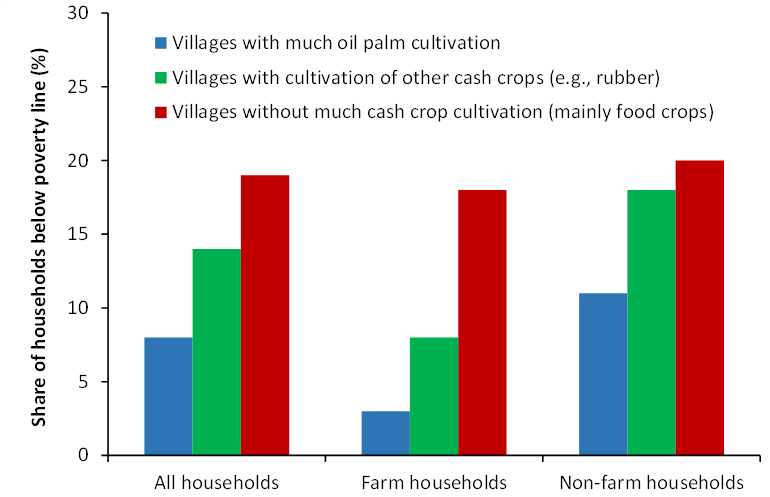
Also, for farmers across the world palm is a robust, reliable crop. For farmers living in poverty the production of palm oil can be a great support. Palm oil can be harvested every two weeks, providing a steady income that can be used by farmers to cover all types of essential costs, including school fees and medical expenses. This means that palm oil contributes not just to farmers and their families today, but is also an important part of securing rural communities.  

2. Don’t just switch to ‘palm oil free’ products! 

You may think that finding products with sustainable palm oil is difficult. Maybe you can just buy products without palm oil instead. These are easy to find. They come with a big label proclaiming that they are: Produced without Palm Oil. At first glance this may seem like a great alternative. However there is a crucial flaw in this approach. That flaw is that replacing palm oil does not necessarily mean a or more ethically produced product. 

The thing is, all products have an environmental impact. As consumers we need to start intelligently navigating these issues. By replacing palm oil with alternatives, we are missing the opportunity to take responsibility for bad palm oil practices, helping to address them and ensure a more sustainable supply. Instead, by buying a ‘palm oil replacement’ we could end up contributing to other negative environmental impacts. This is because all agricultural production has an impact on the environment, something as true for palm oil and most other crops. So rather than replacing palm oil, we should be looking at how we can separate the wheat from the chaff in the products we already use. To prevent illegal logging we don’t stop using wood in favour of plastic. Instead we make sure the wood is certified, and comes from a plantation. With palm oil it’s no different. There is a world of difference between unsustainable and sustainable palm oil.  

Right now 86 % of palm oil used in Europe for consumer products is RSPO certified, meaning that the vast majority of palm oil products produced and sold in European supermarkets are already geared towards sustainability. Let’s help these companies in their effort to do better! By buying products with sustainable palm oil we can further support companies to invest in, buy and use sustainable palm oil. However, if tomorrow the demand for sustainable products would fall, so too would the impetus for continuing this important trend, as would the desire to see further transformation of the sector. 

So , don’t buy alternatives, instead buy responsibly. For a good overview of how companies producing your brands are performing check out the WWF scorecard. 

3. Support sustainable palm oil initiatives

So outside of consumer choice, how can you make a difference to the rainforests through palm oil? For a more active approach, you can support the initiatives that help expand sustainable palm oil practices.

Sustainable palm oil requires farmers to be equipped with the know-how and tools to take the environment into account. About 40% of the global palm yield is produced by smallholder farmers. Across the palm oil supply chain, millions of smallholder farmers, due to a myriad of factors, fail to reach their full potential. Some of the barriers they have run into in the recent years include: a lack of access to the proper technology and resources; insufficient capacity to make use of the economies of scale; and the lack of financial or temporal space to take part in certification systems.  As such, smallholders are often unable to produce a living income for themselves and their families. This can be compounded by price drops of palm oil on the global market, deepening their dependence on cheaper, less sustainable methods of production. Needless to say, these issues don’t make reaching the sustainability standards of programmes such as the Roundtable on Sustainable Palm Oil any easier. However, with the right programmes to support them, these smallholders can become a part of the solution.

This year, Solidaridad and IDH started implementing a new programme geared specifically at smallholder farmers, the National Initiatives for Sustainable and Climate Smart Oil Palm Smallholders, or NI-SCOPS. The programme was developed together with four important palm oil producing countries -Indonesia, Malaysia, Ghana and Nigeria- in partnership with the Dutch government. Within the NI-SCOPS programme these countries have committed to addressing their palm oil supply chains and tackling the negative impacts. The NI-SCOPS programme supports the farmers directly by helping them increase productivity through adoption of best management practices. It helps them by showcasing and encouraging important innovations in the field. Crucially, it also empowers them to build resilience to the impact of climate change, while still moving towards lower greenhouse gas emissions through more efficient land use. 

You can learn more about this programme on the Solidaridad website or at the website of IDH.

Conclusion: Saving the rainforests

Will buying sustainable palm oil be enough to save the rainforests? Of course not. The issues affecting the conservation of this vital ecosystem are widespread and involve a lot more products than palm oil. Yet, sustainable palm oil can make a valuable contribution. 

Instead of big statements on replacing palm oil, it is better to start asking the right questions: What is wrong with palm oil? And how can we contribute to fixing it? With the right questions and the right answers we can help save the rainforests from bad palm oil practices. 

Marieke Leegwater, Programme Manager Sustainable Palm Oil Choice/Solidaridad


Palm oil is has become highly controversial in recent years. While many advocate a total ban on this crop, an increasing number of  conservation organisations are committed to support the move to 100% sustainable palm oil. Why do they choose for sustainable palm oil? Emma Payne from Bristol Zoological Society explains to us why this is key to the conservation of wildlife and natural habitats:


As part of our commitment to ‘saving wildlife together’ at Bristol Zoological Society we are dedicated to promoting a world where all palm oil is 100% sustainably produced.

Bristol Zoological Society is a registered education and environmental charity, which runs and manages Bristol Zoo Gardens and Wild Place Project, as well as conservation projects in 10 countries around the world.

Palm oil is the most widely used vegetable oil in the world with approximately 60 million tonnes produced each year, but when produced unsustainably it has negative consequences on the environment and biodiversity.

Over the past few years, we have been spearheading a campaign to encourage people to choose products containing sustainable palm oil, and to encourage organisations to take responsibility for sustainable sourcing and correct labelling of palm oil products.

Why stick with palm oil?

There is large controversy surrounding palm oil production, led by high-profile organisations and hard-hitting advertising campaigns. These promote a total ban on palm oil, but this is not the best solution.

Replacement vegetable oil crops have a far lower yield, so more land would be needed to produce the same amount of vegetable oil. Palm produces up to ten times more oil per hectare than any other crop in the world, so it can be produced using far fewer plants, and therefore less land.

We believe something can be done about the use of palm oil without destroying livelihoods or using even more land for crops – by supporting sustainable production.

Consumer behaviour

Part of our work involves encouraging consumers to choose products which contain sustainable palm oil. This begins with informing people about the benefits of sustainable palm oil, using our platform at Bristol Zoo Gardens and beyond.

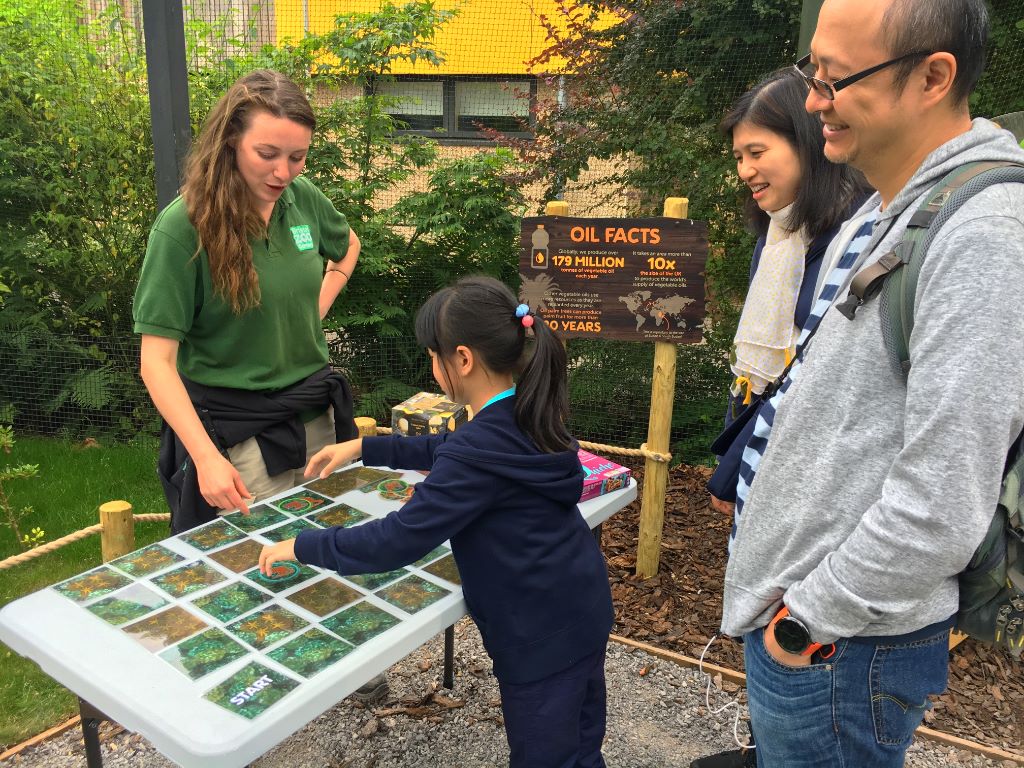
At the Zoo, we have featured exciting interactive displays within animal exhibits, which explain the palm oil issue to a new generation of future conservationists. Last year, this included showcasing a hamper filled with sustainable palm oil products in our shop, promoting sustainable brands and encouraging visitors to think about their purchases. At Christmas, we donated 10 of these hampers to a local Bristol foodbank, both raising awareness and giving back to our community.

To further help consumers make positive choices, we are campaigning for mandatory labelling of sustainable palm oil in UK supermarket products. Close to home, we have been working with local businesses in Bristol and helping them develop sustainable palm oil position statements and undertake audits of their supply chains. This is something we are also committed to at both Wild Place Project and Bristol Zoo Gardens, also working closely with our concessions partners, as part of our five-year plan.

Protecting Endangered Species

Unsustainable palm oil plantations can have a devastating impact on a wide range of animal and plant species. Our conservation projects include the protection and breeding of Endangered and Critically Endangered species that are threatened by loss of habitat.

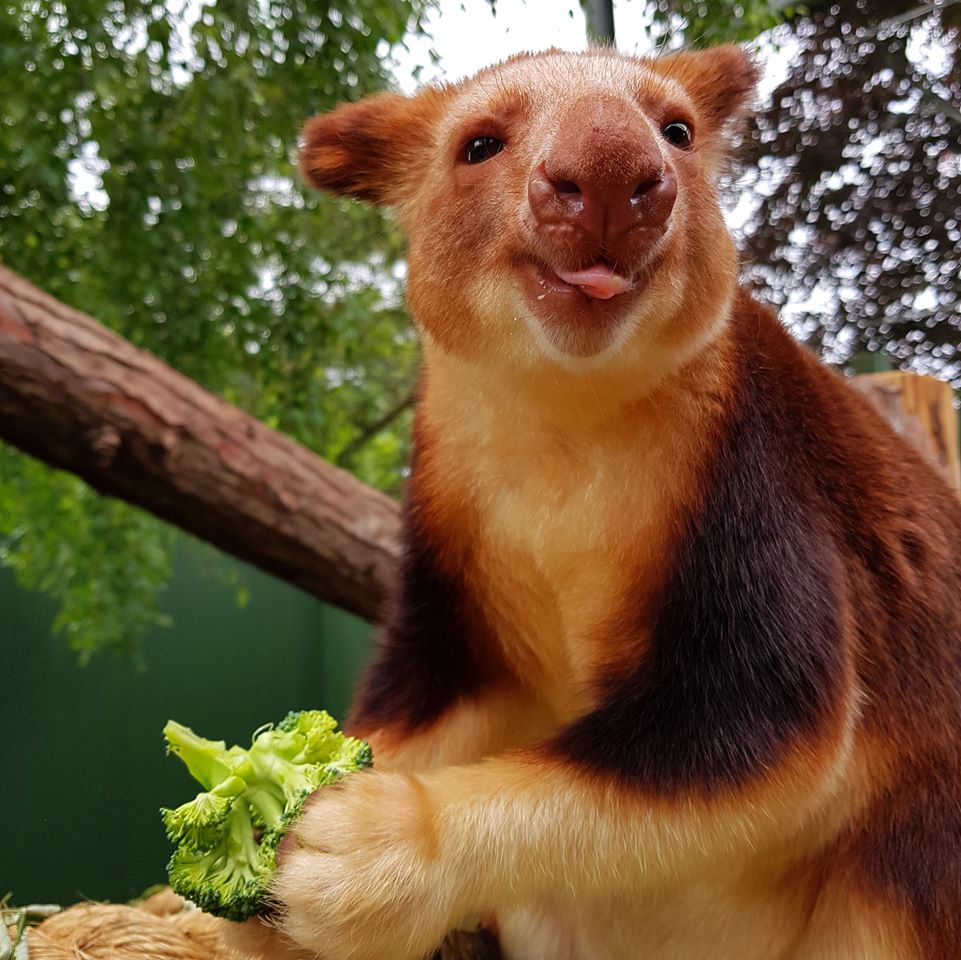
The Goodfellow’s tree kangaroo is one species which has become endangered due to deforestation in their native Papua New Guinea, including logging and non-sustainable palm oil plantations. At Bristol Zoo Gardens, we are part of the European breeding programme for this species and have a breeding pair.

This year we welcomed our first joey, in an exciting boost for the programme – it was one of only two tree kangaroo joeys to have been bred successfully in captivity in the UK in the past year. It was particularly important as the joey’s dad, Mian, joined us from Perth in Australia, so he and the youngster bring new genes for the programme.

Saving Wildlife Together

Bristol Zoological Society, which operates Bristol Zoo Gardens and Wild Place Project, is a conservation and education charity and relies on the generous support of the public not only to fund its important work at Wild Place Project and Bristol Zoo, but also its vital conservation and research projects spanning five continents.

Our diverse conservation projects include:

  • Working with the University of Bristol to develop new drone technology, allowing us to track the Critically Endangered Kordofan giraffe in Cameroon
  • At our Ankarafa field station, we are working to secure the future of Madagascar’s people and their threatened wildlife, protecting threatened lemurs, supporting reforestation, fire control and protection, and the provision of schools and drinking water.
  • Breeding and reintroducing Endangered white-clawed crayfish in south-west England, a species which has suffered a 70% decline in the past 50 years

Further to this, we have programmes protecting species such as the Endangered African penguin, and the Critically Endangered Desertas wolf spider, lemur leaf frog, Livingstone’s fruit bat and western lowland gorilla.

Click here to find out more about our commitment to sustainable palm oil.

Curious about how other zoos are driving change in the palm oil industry? Find out more here.


With the world’s attention focused on the global pandemic of the coronavirus, it may seem an unusual time for me to write an article about palm oil. “What’s the connection?” you may ask. The most widely proposed theory regarding the source of the coronavirus is that it most likely came from wildlife traded in so-called “wet markets” in China and spilled over to humans. It would not be the first time that zoonotic transmission of pathogens (when diseases emerge in non-human animals and are passed onto humans) led to massive outbreaks around the world. In fact, it is believed that more than half of all human pathogens are believed to be zoonotic.

In this article I’d like to share my perspective on the role of the palm oil industry in the emergence of pandemics, how conventional production is still a threat, and how sustainable palm oil truly is the only way forward.

Coronavirus and Deforestation
Scientists have been researching what it is that brings humans in contact with non-human animals resulting in diseases like Covid-19. It is more than simply a case of hunting and selling of wildlife. Overwhelmingly, the evidence points to disturbance of ecosystems. Researchers from IPBES recently reported that, “Rampant deforestation, uncontrolled expansion of agriculture, intensive farming, mining and infrastructure development, as well as the exploitation of wild species have created a ‘perfect storm’ for the spill-over of diseases from wildlife to people.” As human densities increase, more encroachment on natural habitat by people as well as domesticated animals results in more frequent contact with wildlife that may be carrying pathogens. Furthermore, the assault on biodiverse ecosystems can influence how many viruses exist in the wild and how they behave. When species at the top of the food chain disappear, the result is a proliferation of those species lower down the food chain (such as bats and rats) which tend to carry more pathogens. The disruption of habitat also means that these species, with their diseases, may be forced to go elsewhere included areas populated by people.

Looking at the history
The clearing of forest for oil palm in the past has resulted in deadly transmission of disease. The Environmental Investigation Agency mentions three notable examples:

  • When Indonesia burned much of its forest for palm oil plantations in the 1990s, bats harbouring the Nipah virus flew to Malaysian farms to feed on fruit trees. The disease jumped from bats to people via pigs – and had a human mortality rate of up to 74 per cent.
  • The clearing of forests for palm oil plantations in West Africa also led to spill-over of the Lassa virus, which triggers a haemorrhagic fever like Ebola in humans and can kill 30 per cent of the infected.
  • A recent study directly linked an increase in forest clearance for palm oil production in Malaysian Borneo to an increase in malaria.

Working towards a solution
It’s no secret that the conventional production of palm oil is responsible for massive deforestation in areas of immense biodiversity. In the past two decades, millions of hectares of forest have been cleared for this crop. The impact on wildlife, ecosystem services, the climate and on people cannot be ignored. Acknowledgment of these issues led NGOs and progressive companies in the palm oil supply chain to form the Roundtable on Sustainable Palm Oil in 2004, with a view to defining how to cultivate palm oil sustainably. Today, the comprehensive, but voluntary, RSPO standard delivers on civil society and market demands for No Deforestation, No Peat Conversion and No Exploitation (NDPE).

Yet only 20% of global production of palm oil is currently certified sustainable by the RSPO. Many large companies have pledged to halt deforestation in their supply chains, including palm oil, soy, timber and pulp, through initiatives like the Consumer Goods Forum but have failed to deliver on these pledges. There is simply no excuse for manufacturers and retailers to source anything less than 100% certified sustainable palm oil through one or more of the four supply chain options offered by the RSPO. Unless companies sourcing palm oil make the distinction and choose exclusively sustainable palm oil, there will be little incentive for oil palm growers to become (or remain) certified as sustainable. And until they do, they can be seen as complicit in jeopardising millions of lives of people around the world through their failure to remove deforestation and biodiversity loss from their supply chains.

Responsibility
Covid-19 and other recent pandemics are the result of careless human activity, often in the pursuit of economic growth at any cost. This should be a wake-up call that we simply cannot continue “business-as-usual,” and we must take the responsibility to make the right choices moving forward. We must demand sustainable agricultural production and development, including oil palm, that protects both people and forests.

Michelle Desilets, Conservationist and Executive Director Orangutan Land Trust

Millions of people around the world have seen the footage of the lone wild orangutan in an apocalyptic landscape of destroyed forest desperately trying to fight off a bulldozer; it has become symbolic of the catastrophic devastation wrought upon rainforests and wildlife by the palm oil industry. 

So, it comes as no surprise that caring people around the world who have become aware of the situation are outraged, and want to play no part in the destruction. And it is also not surprising that the first reaction is to want to stop consuming palm oil. Some brands and retailers have seen an opportunity to cash in on this conviction, by telling consumers that “Saving orangutans is as easy as just saying no to palm oil.” Oh, how I wish it WERE that easy.

But it is not.

Habitat
Orangutans live only on the islands of Sumatra and Borneo in Indonesia and Malaysia. The conditions which make the habitat ideal for orangutans are the same conditions which make the region ideal for the cultivation of oil palm: a tropical climate with plenty of rain. And it just so happens that these two countries account for more than 85% of the global production of palm oil. As a result, outside of protected areas, orangutan habitat has been hugely fragmented by the expansion of oil palm. How are we to save the orangutan given these circumstances?

Science
To address complex issues successfully, it is important that research and science play a part. The organisation I direct, Orangutan Land Trust, is assisted by a formidable Scientific Advisory Board made up of some of the leading experts in orangutan and wildlife conservation, peatland protection, forestry, sustainability and more. These experts help us determine the best strategies for saving orangutans and their rainforest habitat. Understanding precisely where orangutans and oil palm overlap and how orangutans behave and adapt to these fragmented landscapes is critical to developing sustainable and impactful solutions.

Resilient landscapes
The work of Borneo Futures, with lead scientists Dr Erik Meijaard and Dr Marc Ancrenaz, has provided great insight. In a report commissioned for the PONGO Alliance (Palm Oil and NGO Alliance, which brings together some of the largest oil palm companies, NGOs and experts), they discovered that 10,000 orangutans live in areas allocated for industrial oil palm in Borneo alone. It was clear that the strategy of trying to remove orangutans from oil palm landscapes was not tenable. The fact is, orangutans are found in vast numbers in these landscapes, and so we must find a way to develop resilient landscapes for both people and wildlife.

Developing solutions
Dr Ancrenaz’s research in the highly fragmented Kinabatangan landscape in Sabah showed that orangutans can and do move across oil palm estates and although they cannot survive exclusively on the fruit of the oil palm or the shoots of young palms, they can manage if they can find safe patches of forest along the way with a variety of food sources. Research has shown that orangutans can do well in selectively logged, secondary forests as well. Basically, as Dr Ancrenaz describes it, large terrestrial species like orangutans and elephants that find themselves in these landscapes need 3 things to survive: sufficient food resources, space to move and find mates, and to not be killed.

Safe havens
Where does sustainable palm oil fit in? To begin with, under RSPO, growers are not permitted to clear forests or develop on peatlands. Orangutans thrive in peatland swamp forests. Growers are also required to conserve or enhance areas of High Conservation Value (which includes the presence of rare, threatened or endangered species like the orangutan.) Additionally, growers are responsible for ensuring that rare, threatened or endangered species not be captured, harmed or killed. PONGO Alliance is a platform that demonstrates that growers can, in fact, create safe havens with abundant food sources and forest corridors to improve connectivity for species like the orangutan.

A boycott is no solution
Palm oil is here to stay. The demand for all edible oil crops continues to rise, and palm oil, the highest yielding of these crops, is both versatile and ubiquitous. If a blanket boycott of palm oil which fails to distinguish between conventional and sustainable palm oil did take hold and result in lowered production of palm oil, then other lower-yielding crops would take its place. In places like the tropics, replacing oil palm with these other crops would only multiply the risk to the remaining rainforests and the biodiversity within them.

How to contribute
When consumers demand sustainable palm oil, they send a message to brands and retailers that they expect that the products they buy do not contribute to deforestation and biodiversity loss. And when these brands and retailers follow through with committing to sourcing only sustainable palm oil, they contribute to the survival of the orangutan.

Make sustainable palm oil the norm
I have helped rescue orangutans from oil palm plantations, nursed them back to health or sadly sometimes watched them die. I have seen the forests I love in Kalimantan bulldozed and burned for oil palm. I’ve met local people whose lives have been made unliveable due to land-grabbing and destruction of their forest larder. So it is with the greatest of conviction and a lot of investigation behind me that I stand by my position that if we are to save the orangutans and their forest habitat, and address the catastrophic impacts associated with conventional palm oil production, we MUST do all we can to make sustainable palm oil the norm.

That’s why we encourage all brands and retailers using palm oil to source 100% Certified Sustainable Palm Oil today, and become part of the solution.

Michelle Desilets, Conservationist and Executive Director Orangutan Land Trust

Are you committed? Join the Sustainable Palm Oil Choice.

join us