
Sorting The Set-Aside Mess – New Publication Provides Guidance for Management
A new publication, freely available in pdf, shows how oil palm landscapes can contribute to wildlife conservation. ‘Wildlife Conservation in the Oil Palm Landscape’ is produced by a small, specialist NGO (BORA, www.bringingbackourrareanimals.org) that has long experience with wildlife management in Malaysia and is walking the talk with orangutans, elephants and wild cattle in the oil palm landscape of eastern Sabah, Borneo.
‘Oil Palm Landscape’ refers to large areas where most of the land cover is oil palm plantation, with some villages and residual forest patches. High Conservation Value (HCV) areas, riparian zones, wetlands, steep slopes and forest edge buffer zones can all be characterized as ‘Set-aside’ lands – different names and origins but all uncultivated lands within oil palm monocultures.
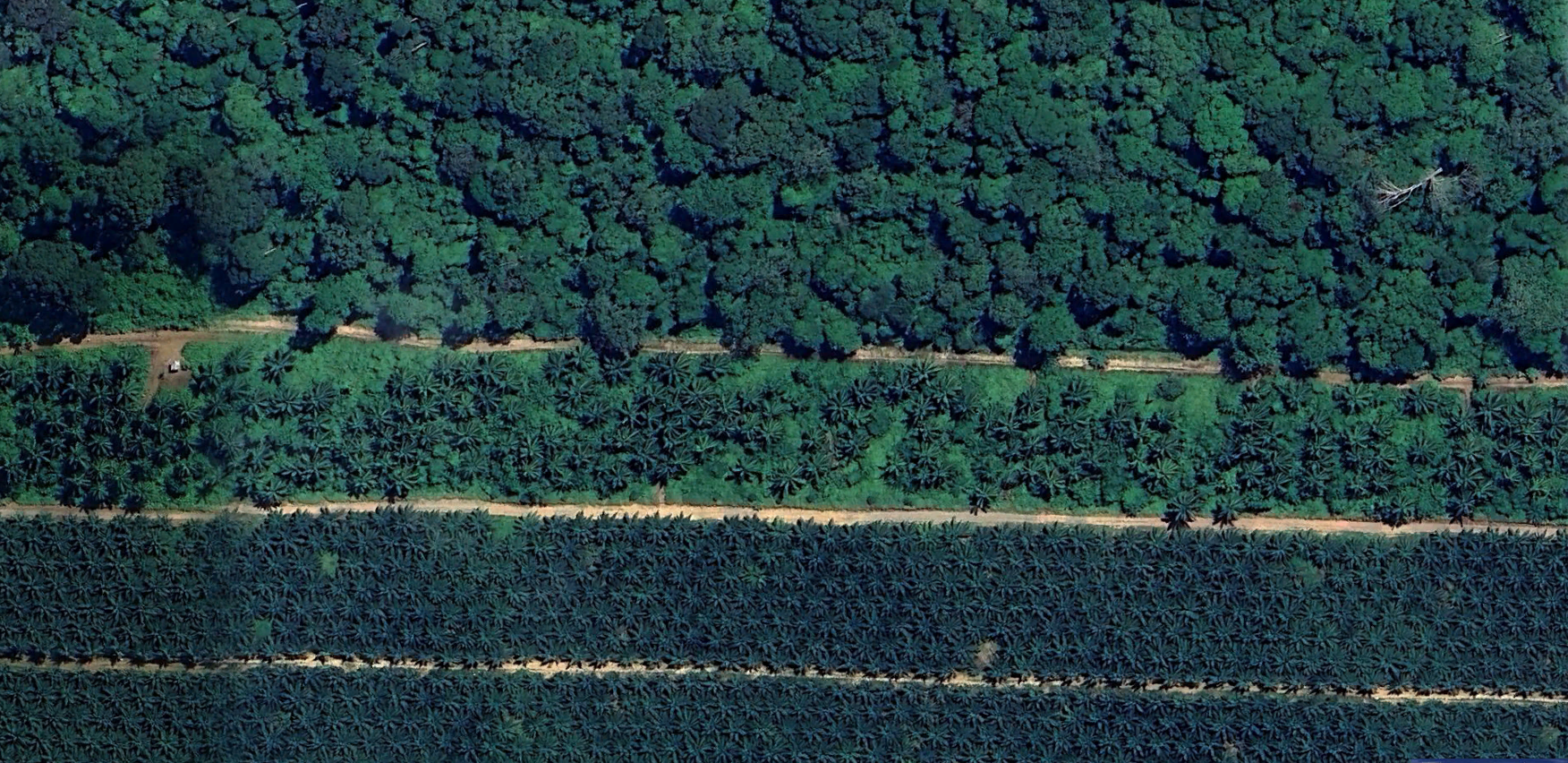
Protected forest area (top), a fifty-metre ‘buffer zone’ of abandoned old oil palms (middle) and young, productive oil palms (bottom) in eastern Sabah, Malaysia
‘Set-aside’ lands within the oil palm landscape have little value unless they are actively managed with targets in mind. This is because they are too small and scattered to support viable populations of most wild species that we find there now. Most wild species now included in ‘biodiversity’ lists in oil palm plantations will drift to extinction, leaving a few, very common, robust animal and plant species. Thus, the prevailing passive approach of protecting and monitoring ‘set-aside’ lands, and planting trees ad hoc in a few places, will result in the gradual loss of most species from those habitats, while a few robust species become more common.
What is really needed is a fresh look, with the aim of helping to manage species that are both either rare or problematical (or both), by actively managing and enriching whatever forest reserves and ‘set-asides’ now exist in the landscape that has been created by humans.
This booklet provides a series of descriptions and analyses, a conceptual background, and recommendations for implementable actions, based on the experience of BORA since 2019.
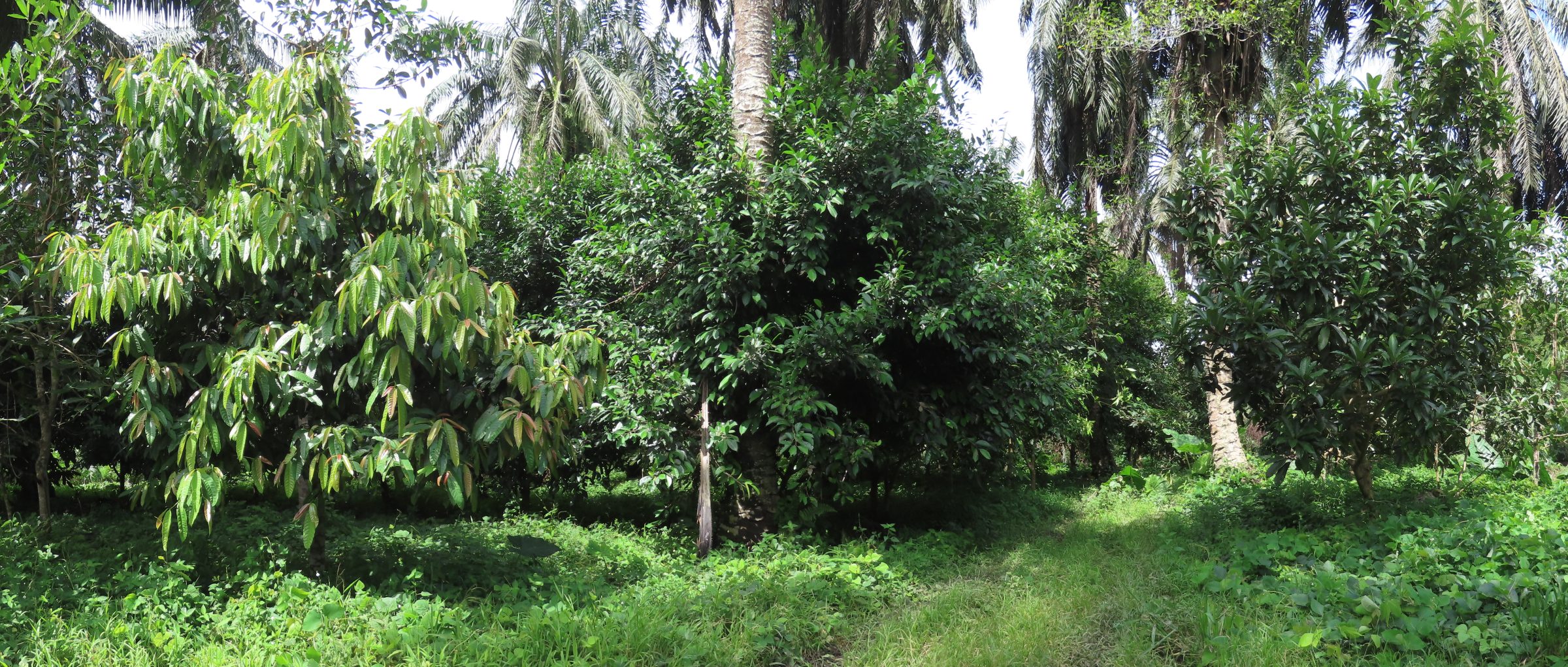
4.5-year-old Ficus trees planted by BORA from marcots in a riparian zone with retained old palms
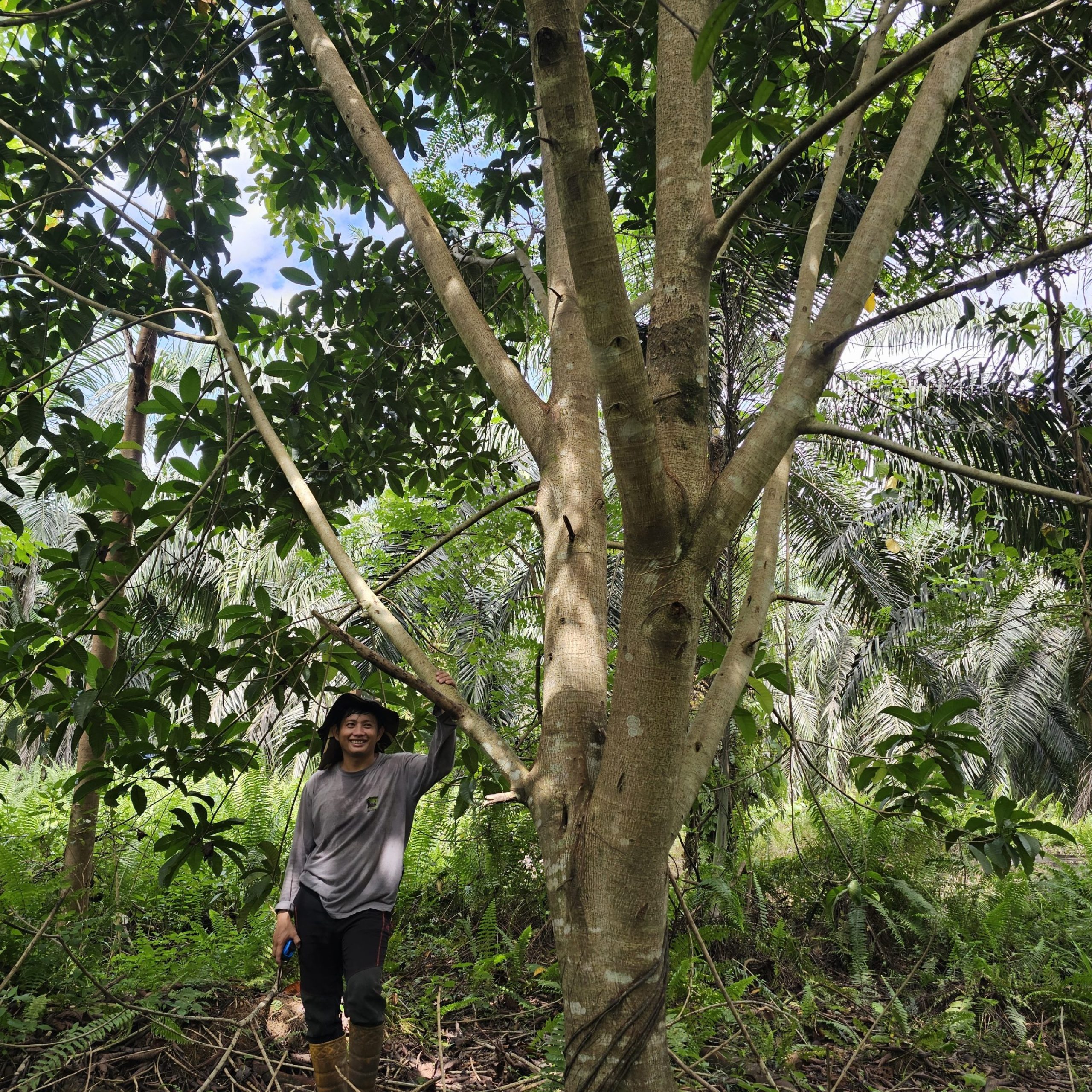
4.5-year-old planted Ficus annulata, an orangutan food plant on a riparian zone in a SD Guthrie estate
There are costs involved in active enrichment and management of set-asides. This is the main reason little such effort has been made to date. However, in relation to the overall costs involved in maintaining ‘sustainability’ work, in developing and implementing the environmental, social and governance (ESG) framework to assess an organization’s business practices, and in marketing Malaysian palm oil as sustainable, the costs involved in conducting work outlined in this booklet will be trivial.
It is proposed that Malaysia adopt two flagship wildlife species whereby the Malaysian palm oil industry can tell the world that it is actively helping to support their conservation: orangutans and elephants.
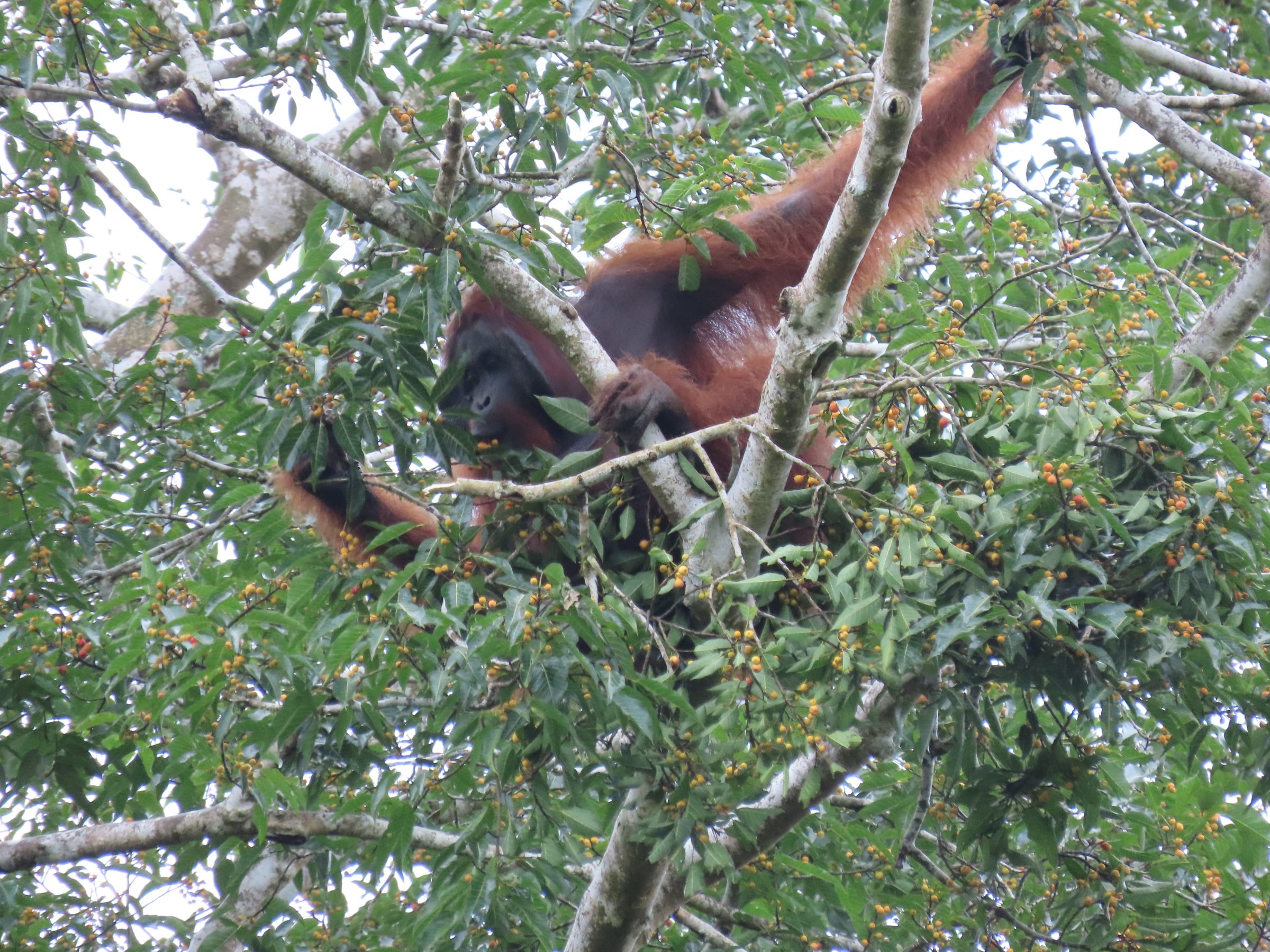
Male orangutan feeds in Ficus albipila fruits in a riparian zone
One or more of the big oil palm growers could start a targeted set-aside management programme at any time. The potential competitive advantage to be gained by any company or institution being a ‘first mover’ has not been realized. In the absence of a ‘first mover’ amongst either palm oil growers, or traders, or mainstream NGOs involved in support for the palm oil industry, it will be up to government policy to set the ball rolling.
“Wildlife Conservation in the Oil Palm Landscape” is authored by Dr John Payne, Dr Zainal Zahari Zainuddin and Mellinda Jenuit. Download your copy from this link.